

Friday, 8 April 2011


Differences Between A Teaser Trailer And A Theatrical.
Scream 4 Teaser Trailer.
The difference between a teaser trailer and theatrical trailer is firstly the duration. Teaser trailers are normally around the 1 minute mark, and this because it reveals part of the narrative but not enough. This 'teases' the audience and makes them want to know more. Another difference between these trailers are that the teaser trailers are purely designed to intice the audience, therefore it can contain clips that werent included in the final film. This is to add the eerie effect that can again make the audience want to know more. In the Theatrical trailer the plot is revealed at a slower rate and this is something that is effective as it can draw the audiences in and become to be attached to the charaters, but then in the trailer ends. This is something that makes the audience wonder what happens to the characters they are beggining to have a responce with.
Scream 4 Theatrical Trailer.
The difference between a teaser trailer and theatrical trailer is firstly the duration. Teaser trailers are normally around the 1 minute mark, and this because it reveals part of the narrative but not enough. This 'teases' the audience and makes them want to know more. Another difference between these trailers are that the teaser trailers are purely designed to intice the audience, therefore it can contain clips that werent included in the final film. This is to add the eerie effect that can again make the audience want to know more. In the Theatrical trailer the plot is revealed at a slower rate and this is something that is effective as it can draw the audiences in and become to be attached to the charaters, but then in the trailer ends. This is something that makes the audience wonder what happens to the characters they are beggining to have a responce with.
Scream 4 Theatrical Trailer.
Thursday, 7 April 2011


Monday, 14 March 2011
In what ways does your media product use, develop or challenge forms and conventions of real media products?
1.
In both of these shots, there is a low angle shot of just the feet. They are used in different ways. In our trailer this is one of the first shots and this makes the audience think whats going on, without revealing the identity. In the Scream 2 trailer the shot is used to show the killers feet and to show he is nearby, but doesn't reveal the identity. This adds suspense to the trailer.
2.
In these shots i have chosen mid-shots of the protagonists. These are used in slightly different ways in the pictures i have chosen. In our trailer this is the final shot we see of him, this makes the audience assume his death in the film. In the Eden Lake trailer this shot is to show the protagonist running away from the antagonists, and this is effective because it shows the audience that there is action and a chasing sequence, this is very common in the horror genre.
3.
In these shots i have chosen natural mid-shots of the protagonists. This is a pivotal point in both films as this is when the items now appearing are catalysts in the storyline and may look innocent but in fact impact both protagonists. In our trailer Sonny has just found the book full of evil that will posses anyone who reads it and will unintentionally read it, and will succumb to the evil. In the Scream 4 trailer the protagonist Sindey is innocently at home, when the phone rings and she answers the horror/storyline is triggered due to the killer being on the other end. This is essential in all horrors.
4.
In our trailer i have chosen the close up of the most pivotal point in our story, as this is the scene where our main protagonist changes to the antagonist. This all happens by him reading the book. And to signify its power we needed and close up of the evil it possesses. In contrast to this in The Last Exorcism trailer the shots are nearly identical but the book in this film possesses good and they are using it to try and vanquish the evil.
5.
In both of these shots there is a POV (Point Of View) from the eyes of the monster/antagonist. This is very common in supernatural horrors, as it makes the horror more intense and more of a emotional response for the audience. In our trailer the camera is following Sonny down a corridor and the camera is used for the eyes of the evil spirit preparing to posses him. In Child's Play trailer the killer doll Chucky is being used as the POV and the doll is pursuing its first victim.
6.
The next shot i chose, i believe is the best shot in our film. As this match on action from Zach, our new protagonist, looking at a picture of the water tower in the toilet, to him being at the water tower. This automatically shows that this place is where the final stand of is going to be and where most of the plot will be discovered. This is a slightly abstract shot, the use of cantered angles is typical horror convention of expressive camerawork rather than naturalistic camerawork. Also in this picture you can make out this is a horror by the filters we used, there is a book involved and someone is trying to discover something mysterious. This is our basic plot this is why i believe it is suitable for the movie poster. In the Amityville Horror trailer this shot is on the DVD cover and on the posters. This straight away shows us that this is where most of the story is based. The use of the moon and it being shot at night time helps create a slight pathetic fallacy effect, as these things connote evil and scary. This is very common in possession horrors.
7.
This is shot is very common within horror trailers, as this is the first time you see a shot of the antagonist. This needs to be in a trailer to show that there is a evil and to keep the audience guessing. In our trailer we chose a mid-shot but we decided not to go to close as this would reveal the antagonists facial features, and this is something that we wanted to keep secretive to add to the suspense, also we decided to make the shot flash up on the screen as this helps to scare the audience. In the Scream 3 trailer the shot is very similar but being a sequel and a selling point of the film the antagonists features needed to be shown. This is because it is highly recognisable and obvious that it is a Scream film, this automatically shocks the audience.
8.
Penultimately, this shot is very effective in horrors. The use of reflections has been used since the very creation of horror, as they can be used to great effect to scare the audience. In our trailer we have used a puddle reflection of Zach our protagonist as our antagonist appears in the reflection. We have placed this in our montage sequence near the end of our trailer. We did this because audience only get a flash of this which adds to the suspense and keeps them wanting to know what is going on. In the Scream trailer as Casey approaches the window the iconic mask flashes on the screen this makes the audience jump and keeps them wondering what happens to Casey after this, so it keeps them glued to the screen.
9.
Finally, i have chosen the very last shot in our trailer. This is very important within the horror genre as this is need to draw the audience back. So we decided to get a close up of Sonny our antagonist and change the filter and edit the shot so it scary and the red connotes blood, death and evil. This is also a flash on the screen so that the audience cant make out what is going on, so they need to come and watch the film to find out. In The Last Exorcism trailer the shot isn't at the end of the film, but it is used in the same way. As this is in a montage sequence as the young girl gets possessed and this again flashes up and keeps the audience guessing which draws them towards the film.

In both of these shots, there is a low angle shot of just the feet. They are used in different ways. In our trailer this is one of the first shots and this makes the audience think whats going on, without revealing the identity. In the Scream 2 trailer the shot is used to show the killers feet and to show he is nearby, but doesn't reveal the identity. This adds suspense to the trailer.
2.
In these shots i have chosen mid-shots of the protagonists. These are used in slightly different ways in the pictures i have chosen. In our trailer this is the final shot we see of him, this makes the audience assume his death in the film. In the Eden Lake trailer this shot is to show the protagonist running away from the antagonists, and this is effective because it shows the audience that there is action and a chasing sequence, this is very common in the horror genre.
3.
In these shots i have chosen natural mid-shots of the protagonists. This is a pivotal point in both films as this is when the items now appearing are catalysts in the storyline and may look innocent but in fact impact both protagonists. In our trailer Sonny has just found the book full of evil that will posses anyone who reads it and will unintentionally read it, and will succumb to the evil. In the Scream 4 trailer the protagonist Sindey is innocently at home, when the phone rings and she answers the horror/storyline is triggered due to the killer being on the other end. This is essential in all horrors.
4.
In our trailer i have chosen the close up of the most pivotal point in our story, as this is the scene where our main protagonist changes to the antagonist. This all happens by him reading the book. And to signify its power we needed and close up of the evil it possesses. In contrast to this in The Last Exorcism trailer the shots are nearly identical but the book in this film possesses good and they are using it to try and vanquish the evil.
5.
In both of these shots there is a POV (Point Of View) from the eyes of the monster/antagonist. This is very common in supernatural horrors, as it makes the horror more intense and more of a emotional response for the audience. In our trailer the camera is following Sonny down a corridor and the camera is used for the eyes of the evil spirit preparing to posses him. In Child's Play trailer the killer doll Chucky is being used as the POV and the doll is pursuing its first victim.
6.
The next shot i chose, i believe is the best shot in our film. As this match on action from Zach, our new protagonist, looking at a picture of the water tower in the toilet, to him being at the water tower. This automatically shows that this place is where the final stand of is going to be and where most of the plot will be discovered. This is a slightly abstract shot, the use of cantered angles is typical horror convention of expressive camerawork rather than naturalistic camerawork. Also in this picture you can make out this is a horror by the filters we used, there is a book involved and someone is trying to discover something mysterious. This is our basic plot this is why i believe it is suitable for the movie poster. In the Amityville Horror trailer this shot is on the DVD cover and on the posters. This straight away shows us that this is where most of the story is based. The use of the moon and it being shot at night time helps create a slight pathetic fallacy effect, as these things connote evil and scary. This is very common in possession horrors.
7.
This is shot is very common within horror trailers, as this is the first time you see a shot of the antagonist. This needs to be in a trailer to show that there is a evil and to keep the audience guessing. In our trailer we chose a mid-shot but we decided not to go to close as this would reveal the antagonists facial features, and this is something that we wanted to keep secretive to add to the suspense, also we decided to make the shot flash up on the screen as this helps to scare the audience. In the Scream 3 trailer the shot is very similar but being a sequel and a selling point of the film the antagonists features needed to be shown. This is because it is highly recognisable and obvious that it is a Scream film, this automatically shocks the audience.
8.
Penultimately, this shot is very effective in horrors. The use of reflections has been used since the very creation of horror, as they can be used to great effect to scare the audience. In our trailer we have used a puddle reflection of Zach our protagonist as our antagonist appears in the reflection. We have placed this in our montage sequence near the end of our trailer. We did this because audience only get a flash of this which adds to the suspense and keeps them wanting to know what is going on. In the Scream trailer as Casey approaches the window the iconic mask flashes on the screen this makes the audience jump and keeps them wondering what happens to Casey after this, so it keeps them glued to the screen.
9.
Finally, i have chosen the very last shot in our trailer. This is very important within the horror genre as this is need to draw the audience back. So we decided to get a close up of Sonny our antagonist and change the filter and edit the shot so it scary and the red connotes blood, death and evil. This is also a flash on the screen so that the audience cant make out what is going on, so they need to come and watch the film to find out. In The Last Exorcism trailer the shot isn't at the end of the film, but it is used in the same way. As this is in a montage sequence as the young girl gets possessed and this again flashes up and keeps the audience guessing which draws them towards the film.
1

2

3

4

5

6

7

8

9
How effective is the combination of your main product and ancillary texts?
The poster, magazine and teaser trailer are all very influential in promoting the film and attracting the audience. The movie poster is very important as this is something that will be seen everywhere and need to catch the eye of the auidence. The poster and the trailer are controlled by the same distributor, and with all the other movies being released at the same time, it needs to stand out from the crowd.

For my magazine cover, i decided to create my own EMPIRE magazine. For the picture i chose a simplictic idea with great meaning. It is an extreme close up of our antagonists eye which i have edited using photoshop to make the eye look evil. This automatically helps tell the genre of the magazine. Then i decided to choose the most iconic shot in our trailer and place in the centre of the eye, and this should let the auidence know what film the main article is about without reading it. I have chosen cover lines such as "Wes Cravens new supernatural horror" and "A world exclusive look into this summers most anticipated horror" These are the sorts of cover lines you see on magazine covers when big movies are released. And i have kept to the EMPIRE theme by creating other cover lines. Also i decided to have a colour theme which is red, black and white as this adds authenticity and the colours i have chosen are common for horror genres.
 I went for a storying telling effect for my poster, as this is going to be the something the audience will see and will need too be attracted towards the film. I again have decided to use the iconic setting photo of the watertower, and this helps picture the setting. With this picture in the foreground, i have decided to blend in two other pictures. And this is something that i believe that helps the audience into the storyline. One picture i have chosen is a close up of the antagonists face, which i haved edited so he has red eyes, which implys there is going to be someone possesed within the film. The next picture i chose was a scene from the film of a close up of the book, which shows there is a book which is important in the plot. This is a very simplistic version of our storyline. Also i have decided to include a some intertitles that are important within the film, these are rememberable and the audience will recognise. The font i have chosen to use for the title is a gothic style which again help show that one of the themes is religon in the film. Also i decided to make the colour red to connote blood to finally show the horror genre.
For my magazine cover, i decided to create my own EMPIRE magazine. For the picture i chose a simplictic idea with great meaning. It is an extreme close up of our antagonists eye which i have edited using photoshop to make the eye look evil. This automatically helps tell the genre of the magazine. Then i decided to choose the most iconic shot in our trailer and place in the centre of the eye, and this should let the auidence know what film the main article is about without reading it. I have chosen cover lines such as "Wes Cravens new supernatural horror" and "A world exclusive look into this summers most anticipated horror" These are the sorts of cover lines you see on magazine covers when big movies are released. And i have kept to the EMPIRE theme by creating other cover lines. Also i decided to have a colour theme which is red, black and white as this adds authenticity and the colours i have chosen are common for horror genres.
I went for a storying telling effect for my poster, as this is going to be the something the audience will see and will need too be attracted towards the film. I again have decided to use the iconic setting photo of the watertower, and this helps picture the setting. With this picture in the foreground, i have decided to blend in two other pictures. And this is something that i believe that helps the audience into the storyline. One picture i have chosen is a close up of the antagonists face, which i haved edited so he has red eyes, which implys there is going to be someone possesed within the film. The next picture i chose was a scene from the film of a close up of the book, which shows there is a book which is important in the plot. This is a very simplistic version of our storyline. Also i have decided to include a some intertitles that are important within the film, these are rememberable and the audience will recognise. The font i have chosen to use for the title is a gothic style which again help show that one of the themes is religon in the film. Also i decided to make the colour red to connote blood to finally show the horror genre.Sunday, 13 March 2011
What have you learnt from your auidence feedback?
Firstly, our target audience for our trailer was 15-24 year old males. occasionally 15-24 year old females who accompany the males on a date to watch a horror. To acquire our audience feedback we screened our trailer in our Media class to our peers that all fit nicely into our target audience bracket. We also uploaded our trailer Youtube this was then easily accessible to show our friends who also suit our target audience. Then when we gathered all there comments, the most common criticism would be that the ending seemed like an anticlimax, as there was tension built up through the trailer but the ending was a disappointment, and there needed to be something jumpy or scary to keep the audience attracted. This is something we decided to develop due to the large amount of criticism. After long debates he decided to include a montage sequence that includes flashes of the antagonist along with locations that pivotal points in relation to the plot. Also on the final point of view (POV) shot of the antagonist creeping up behind the protagonist, we have added a voice over of a growl that signifies a scary devil growl as it creeps up to its prey. Finally after the credits we decided to add an extreme close up of the antagonist, that flashes on the screen. This we have edited to have a red filter which adds a sense of surrealism and this gives the audience a jumpy effect.
At the time of these screenings our soundtrack was in development so there response helped us shape our view on how effective the music is. So when creating it we decided to have a death march style which connotes that some of the characters lives will come to an end, this music is almost like a countdown to the end which keeps the audience engaged. We have also edited it so that it gets louder towards the end as this symbolises the monster getting closer to you which adds to the horror.
Also in our audience feedback we received some positive points. Our most popular positive criticism was our match on action shot, where out protagonist discovers a picture in the toilet of our "final stand" location; the water tower. The camera then creeps over his shoulder and into the photo, then instantly goes from in the toilet to the location in the picture, the camera then reverses its movement back over his should to show an establishing shot of the water tower. This was thought of highly by our peers as this instantly gives a response to who our protagonist is and how you know that place is bad and he is walking towards it. Secondly our inter titles where highly praised as there "simple but very effective" and the transitions we used where slow which made them easily readable. The audience like the choice of inter titles as there was enough to tell the story but not too much to give all the plot away. Lines such as "Only you can defeat it...... When you believe in it" this was praised as it looked "Professional" and stuck in there minds, this would be used as the tagline as its memorable and narrative driven.
Our main aim was not to give to much of the plot away, and from our feedback we let the audience into the plot but not too much as it left some of them wanting to know more, this was the effect we were looking for.
At the time of these screenings our soundtrack was in development so there response helped us shape our view on how effective the music is. So when creating it we decided to have a death march style which connotes that some of the characters lives will come to an end, this music is almost like a countdown to the end which keeps the audience engaged. We have also edited it so that it gets louder towards the end as this symbolises the monster getting closer to you which adds to the horror.
Also in our audience feedback we received some positive points. Our most popular positive criticism was our match on action shot, where out protagonist discovers a picture in the toilet of our "final stand" location; the water tower. The camera then creeps over his shoulder and into the photo, then instantly goes from in the toilet to the location in the picture, the camera then reverses its movement back over his should to show an establishing shot of the water tower. This was thought of highly by our peers as this instantly gives a response to who our protagonist is and how you know that place is bad and he is walking towards it. Secondly our inter titles where highly praised as there "simple but very effective" and the transitions we used where slow which made them easily readable. The audience like the choice of inter titles as there was enough to tell the story but not too much to give all the plot away. Lines such as "Only you can defeat it...... When you believe in it" this was praised as it looked "Professional" and stuck in there minds, this would be used as the tagline as its memorable and narrative driven.
Our main aim was not to give to much of the plot away, and from our feedback we let the audience into the plot but not too much as it left some of them wanting to know more, this was the effect we were looking for.


Friday, 25 February 2011
Tuesday, 23 November 2010
Moodboard

Monday, 22 November 2010
Movie Concept
Set in deep, dense forestation, our horror movie concept includes four teenagers (2 boys and 2 girls), all who venture out to a mythically haunted area of East Anglia, looking to disturb the unknown and have a bit of fun. On their trek into the forest they come across numerous markings on trees and hanging religious symbols all signs of a mass marked perimeter.
Their decision to go on this trip (lead by one powering individual who seems to have a single minority vote) all comes from the discovery of a book, full of myths and legends as they flick through until they come to one page stating ‘the east Anglia terror of 1865’, they giggle yet one member of the group has heard of this myth and says ‘my grandfather is always telling me about it ever since I was a child’. Still not sure whether they believe the myth or not, they plan their weekend away.
All lying to their parents, saying there staying round each other’s; away they go in their two cars towards Thetford forest, following an unregistered map. After hours into the forest, believed to be lost, they ask a dog walker if he/she knows of this myth, he/she replies ‘go home, go away, you shouldn’t be here, nobody should’. Soon later they find the area, spooked out a bit; they go in for a closer look into the dense area.
With a handheld camera ready to capture ‘the haunted’, there now up against something they couldn’t ever imagined. The film is not filmed with a handheld camera; the camera will be from the audiences 3rd person prospective. Although within the footage the teenagers will be seen filming their own ‘homemade footage’.
Their decision to go on this trip (lead by one powering individual who seems to have a single minority vote) all comes from the discovery of a book, full of myths and legends as they flick through until they come to one page stating ‘the east Anglia terror of 1865’, they giggle yet one member of the group has heard of this myth and says ‘my grandfather is always telling me about it ever since I was a child’. Still not sure whether they believe the myth or not, they plan their weekend away.
All lying to their parents, saying there staying round each other’s; away they go in their two cars towards Thetford forest, following an unregistered map. After hours into the forest, believed to be lost, they ask a dog walker if he/she knows of this myth, he/she replies ‘go home, go away, you shouldn’t be here, nobody should’. Soon later they find the area, spooked out a bit; they go in for a closer look into the dense area.
With a handheld camera ready to capture ‘the haunted’, there now up against something they couldn’t ever imagined. The film is not filmed with a handheld camera; the camera will be from the audiences 3rd person prospective. Although within the footage the teenagers will be seen filming their own ‘homemade footage’.
Tuesday, 9 November 2010
2 Horror Trailers
Nightmare On Elm Street (1984)
This trailer typically shows that it is a horror trailer withe use of high pitched synthesiser which gives the trailer a eerie feel that is typical in horror films around this time.
The trailer is left on a cliffhanger; how do you kill a monster in your dreams?
It has a male voice over all the way through to describe the trailer, this adds and sense of despair because he sounds like a man of authority.
The use of Wes Cravens name, he is a well known horror director and this is for production value and can draw a crowd to the film, just because he directed it.
Alien (1979)
This trailer is different to the first one in many ways, and the bit that me and Zack liked the most was that this trailer doesn't give away any spoilers and doesn't reveal any of the plot.
This lets the mind wonder and want to know what its about, and this is achieved through the use of quick cuts, handheld cameras and random reaction shots.
The music is again high pitched, which builds up and gets quicker throughout the trailer, and this is syncronus with the cuts.
There isnt a voiceover in this which agains helps the mind wonder.
The final bit that me and Zack enjoyed was the end, where the intetitles say "no one can hear you scream in space" this is genius because it again lets you wonder what is going to happpen, and it doesnt reveal the monster.
Thursday, 4 November 2010
How The Horror Genre Represents Gender In The Films We Have Studied?

The three films we have studied on gender are:
John Carpenter's Halloween (1978)
Stanley Kubrick's The Shining (1980)
James Watkins's Eden Lake (2008)
We looked at whether women are shown equally with men in horror films, or if they are stereotypically shown as domesticated, familial, consumer or sexual.
We looked at theses sections in all three films: characters, visibility, roles, gaze and narrative/deaths.

Next we looked at roles within the film. The stereotypical domestic roles such as babysitting, cleaning and cooking were all shown with the characters Laurie, Annie and Lynda. Also sexual characters such as Annie and Lynda who have sex in the film and then die. This connotes that sex is bad for women. Also the tradition Familial roles are present in this film, Annie's dad is the sheriff and Judith is Mike Myers's sister.
Then we looked at the Gaze within Halloween, and weather the film identifies with women or it objectifies them. And the very first scene of the film, is a strong male gaze and you get this all through the film when you get at a POV (Point Of View) from Mike Myers; he objectifies Annie, Lynda and Judith and coincidentally kills all of them. But we identify with Laurie as the "final girl" because she chooses not to have sex and sticks to the rules, and coincidentally she is the one who survives.
Finally we looked at the narrative and amount of deaths. and there is approximately equal death toll of 3 females and 2/3 males, but the female deaths are more important within the narrative.
Secondly we looked at The Shining, and this film doesn't have an equal split within main characters; roughly 2/3rd or 60:40 in favour of men. This already gives the women an unfair disadvantage.
The roles in this film are again very typical. Domestically there is Wendy, who cooks, cleans and does all the stereotypical housewife chores. Again there is the Familial roles of Wendy who is Jacks wife and Delbert Grady's twin daughters. And sexually there is one possible scene in the bathroom where women have a sexual role, so unlike Halloween that is not the main driving force of the narrative. Next there is one hint
of the male gaze in the bathroom sequence, but the lady turns into a corpse thus undermining the objectification process. Also like Halloween there is a "final girl" in Wendy and again is slightly androgynous, so in this film the gaze is good and not bias towards men.Finally the narrative and deaths, there are 3 women and 2 men killed and this is similar to Halloween, except that there only 4 women in the whole film, so having only 1 survive again makes the women's deaths more important and targeting women.
Finally Eden Lake, there is a lack of visibility towards women, there are fewer than half as many women as men. This shows that the film is going to be very male dominated in all aspects.
Domestically, the female roles are very stereotypical. Jenny is a teacher, and in the cafe the waitress is female etc. Also the female in the gang Paige is very passive within the gang, she does what she is told and just films and doesn't get involved.
Familial, Jenny becomes Steve's fiance during the film; just before he dies. Brett's dad kills Jenny and beats Brett, this connotes that a broken home effects them both psychologically.
Sexually, Jenny is a attractive looking woman and she has sex, and dies, and again similar to Halloween this is saying sex is bad.
The male gaze similarly to The Shining is complicated within this film. The scene where Jenny and Steve are sitting near the lake, Brett and the gang are looking at Jenny through a pair of binoculars, which is okay until Jenny starts covering herself up and shows she is uncomfortable with it, then it make it bad and uncomfortable for the viewers to look at her sexually. But there is identification with Jenny for much of the film. So the gaze in this like The Shining is okay for women.
Finally the narrative and deaths, 2 out of 3 women die and 4 out of 8 men die. It doesnt really have a sexual agenda and there isnt a victor in the story, because the "final girl" doesnt survive.

In conclusion, these 3 films are all of the Horror genre but they are all different. And the main theme according to gender; is that women are lower than men, and tend to die when they have sex. And if you dont have sex and you look androgyenos then you can survive and occasionally defeat the monster.
Overall the Horror genre has shown it is very stereotypical towards women and like to show them sexually.
Wednesday, 13 October 2010
Narrative Theories.
These are the most influential figures in narrative theories:
Tzetan Todorov
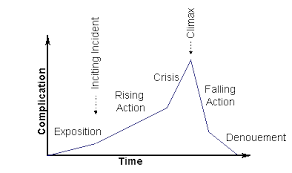
Todorov suggested that stories begin with an equilibrium or status quo where potentially opposing forces are in balance. This disrupted by some event, setting in chain a series of events. Problems are solved so that order can be restored to the world of the fiction. the "Classic Hollywood" or "Classic Realist" narrative structures that appear in most films, is based on Todorov's ideas, where an equilibrium is set up which is disrupted, causing disequilibrium, which is resolved into a new equilibrium by the end of the tale:
 - Earth Vs Space
Bordwell and Thompson, in their book Film Art: An Introduction defined narrative as "a chain of events in a cause-effect relationship, occurring in time and space". Whilst not creating a full theory of narrative, they put together some very interesting ideas. for them, a narrative typically begins with one situation, a series of changes occur according to a pattern of cause and effect; finally a new situation arises that brings that brings the end of a narrative. Narrative shapes material in terms of space and time - it defines where things take place, when they take place, how quickly they take place. Narrative, thus uses technical techniques to manipulate our awareness of time and place; e.g. Flashbacks, replay of action, slow motion, speeding up, jumping between places and times.
Vladimir Propp
Propp looked at 100s of folk tales and identified 8 character roles and 31 narrative functions.
The 8 character roles are:
1. The Villain(s)
2. The Hero
3. The Donor - Who provides an object with some magic property
4. The Helper - Who aids the hero
5. The Princess (The sought for person) - Reward for the hero and object of the villain's schemes.
6. Her Father- Who rewards the hero
7. The Dispatcher - Who sends the hero on his way
8. The False Hero
The character roles and the functions identified by Propp
can be applied to all kinds of narrative. In TV news programmes we are often presented with 'Heroes' and 'Villians'.
Claude Levi-Strauss
Levi-Strauss looked at narrative structure in terms of binary oppositions. Binary oppositions are set of opposite values which reveal the structure of media texts. and example would be GOOD and EVIL - we understand the concept of GOOD as being the opposite of EVIL. Levi-Strauss was not so interested in looking at the order in which these events were arranged in the plot. He looked instead for a deeper arrangements of themes. For example, if we look at Science Fiction films we can identify a series of binary oppositions which are created by the narrative:
- Good Vs Evil
- Past Vs Present
- Known Vs Unknown
- Normal Vs Strange
Bordwell and Thompson


Sunday, 10 October 2010
"The Return Of The Repressed" the definition.
The act of repressing or the state of being repressed.
- Psychology. The unconscious exclusion of painful impulses, desires, or fears from the conscious mind.
- This can be triggered by a certain date, place or emotion and can normally result in a death.
Thursday, 16 September 2010
Subscribe to:
Comments (Atom)