
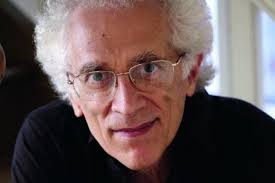
Tzetan Todorov
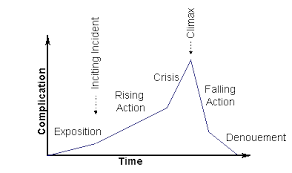
Todorov suggested that stories begin with an equilibrium or status quo where potentially opposing forces are in balance. This disrupted by some event, setting in chain a series of events. Problems are solved so that order can be restored to the world of the fiction. the "Classic Hollywood" or "Classic Realist" narrative structures that appear in most films, is based on Todorov's ideas, where an equilibrium is set up which is disrupted, causing disequilibrium, which is resolved into a new equilibrium by the end of the tale:
 - Earth Vs Space
Bordwell and Thompson, in their book Film Art: An Introduction defined narrative as "a chain of events in a cause-effect relationship, occurring in time and space". Whilst not creating a full theory of narrative, they put together some very interesting ideas. for them, a narrative typically begins with one situation, a series of changes occur according to a pattern of cause and effect; finally a new situation arises that brings that brings the end of a narrative. Narrative shapes material in terms of space and time - it defines where things take place, when they take place, how quickly they take place. Narrative, thus uses technical techniques to manipulate our awareness of time and place; e.g. Flashbacks, replay of action, slow motion, speeding up, jumping between places and times.
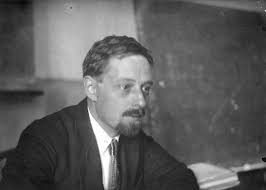
Vladimir Propp
Propp looked at 100s of folk tales and identified 8 character roles and 31 narrative functions.
The 8 character roles are:
1. The Villain(s)
2. The Hero
3. The Donor - Who provides an object with some magic property
4. The Helper - Who aids the hero
5. The Princess (The sought for person) - Reward for the hero and object of the villain's schemes.
6. Her Father- Who rewards the hero
7. The Dispatcher - Who sends the hero on his way
8. The False Hero
The character roles and the functions identified by Propp
can be applied to all kinds of narrative. In TV news programmes we are often presented with 'Heroes' and 'Villians'.
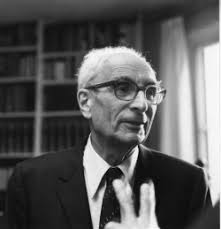
Claude Levi-Strauss
Levi-Strauss looked at narrative structure in terms of binary oppositions. Binary oppositions are set of opposite values which reveal the structure of media texts. and example would be GOOD and EVIL - we understand the concept of GOOD as being the opposite of EVIL. Levi-Strauss was not so interested in looking at the order in which these events were arranged in the plot. He looked instead for a deeper arrangements of themes. For example, if we look at Science Fiction films we can identify a series of binary oppositions which are created by the narrative:
- Good Vs Evil
- Past Vs Present
- Known Vs Unknown
- Normal Vs Strange
Bordwell and Thompson

Nick - this is unfinished. Please complete it URGENTLY. If you are having difficulties see me asap.
ReplyDeleteSean